


Empire Harp by Sebastian Erard (1752-1831), London, early 19th Century
PRICE ON REQUEST
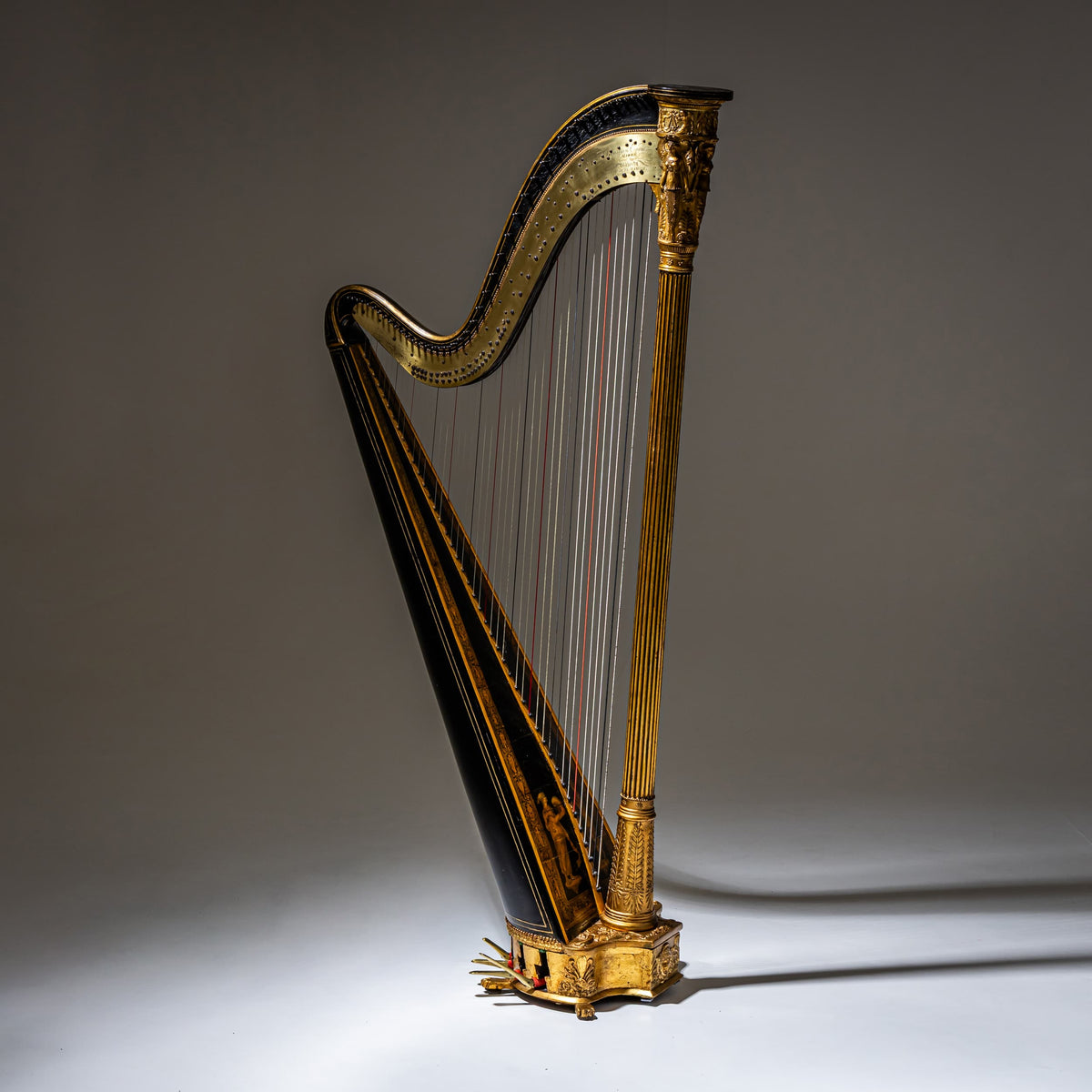
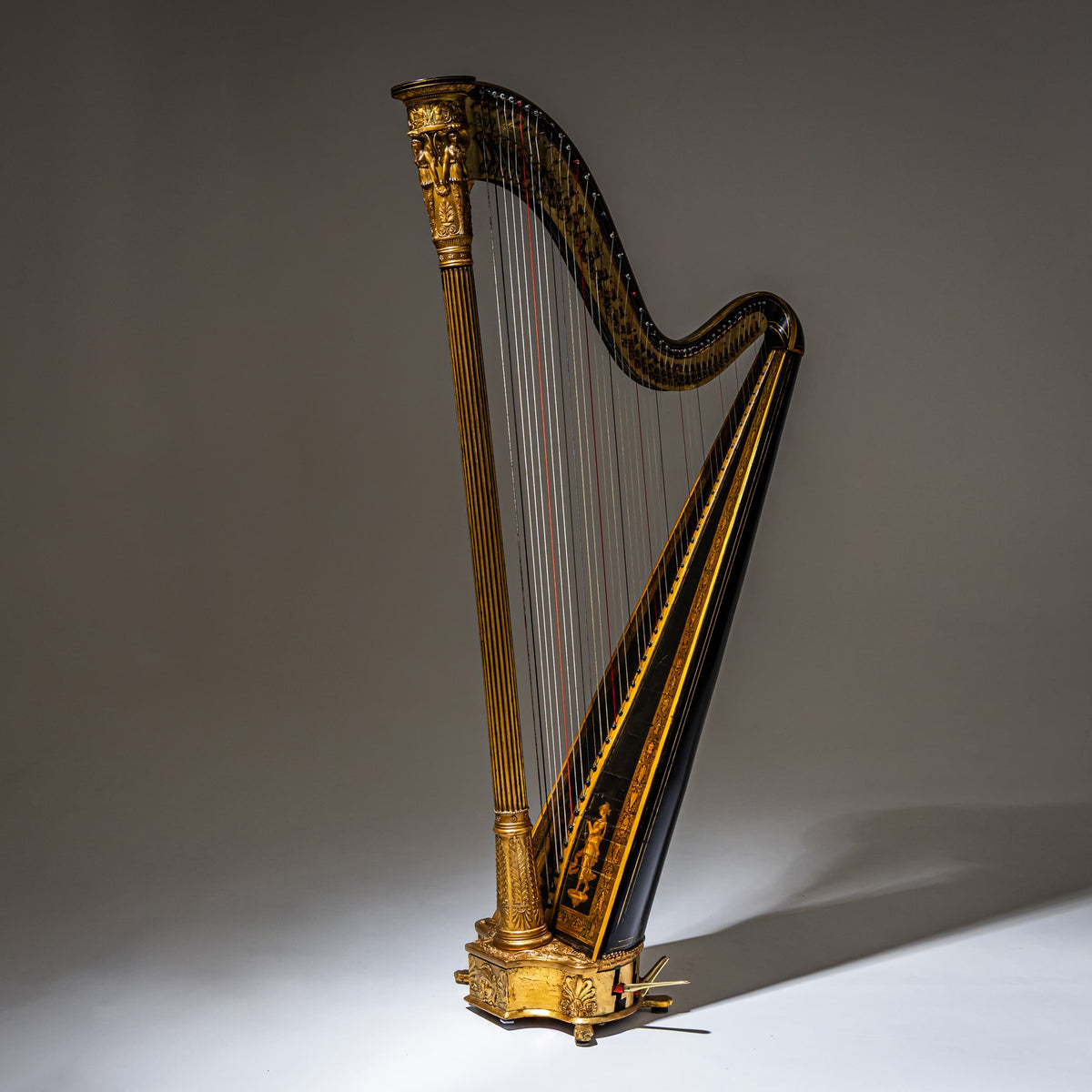
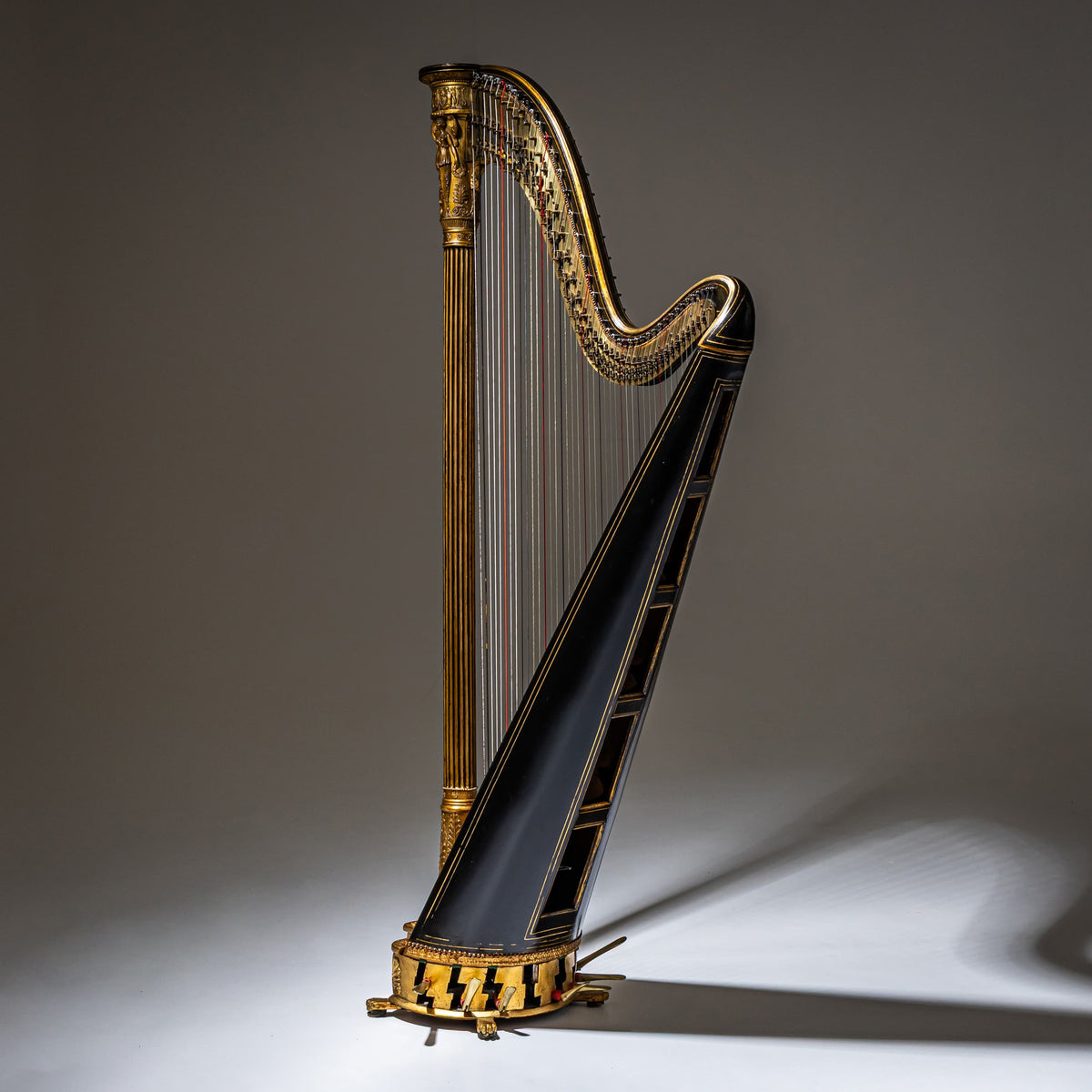
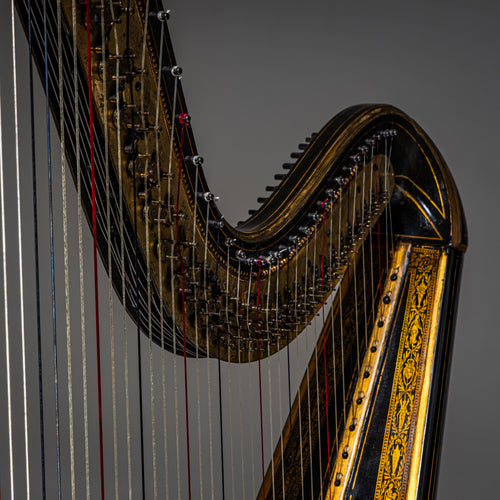
Exceptional Empire harp by Sebastian Erard, London, early 19th century.
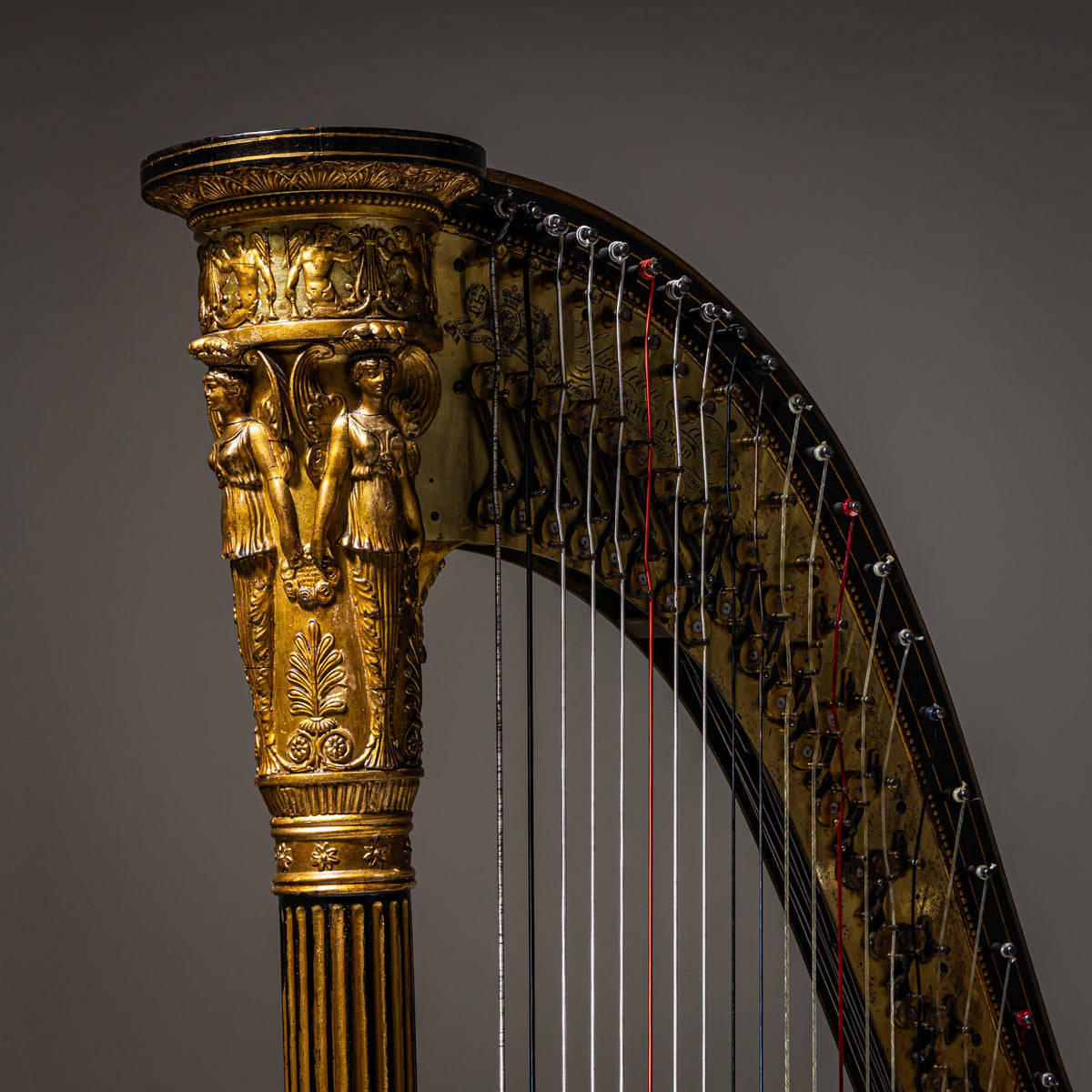
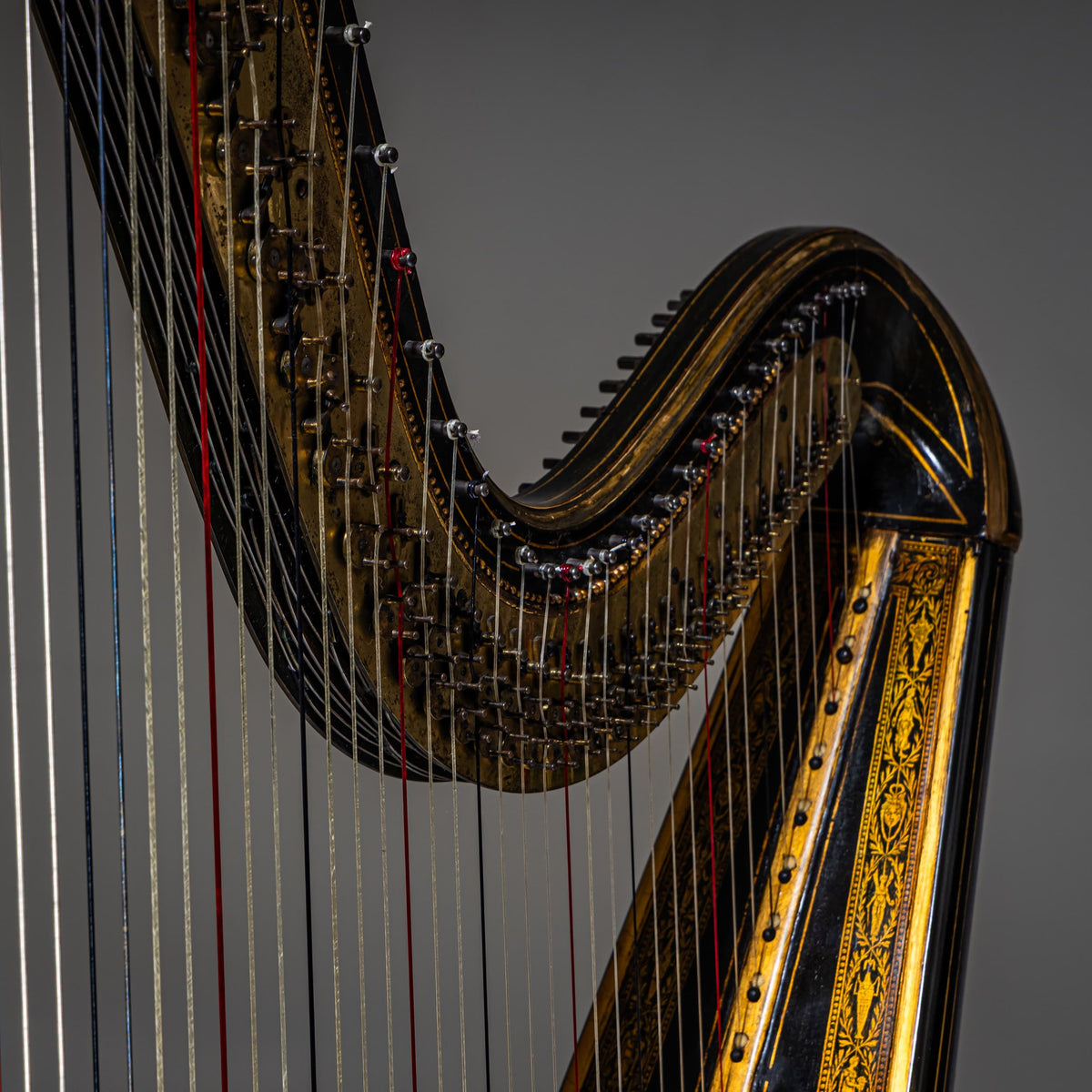
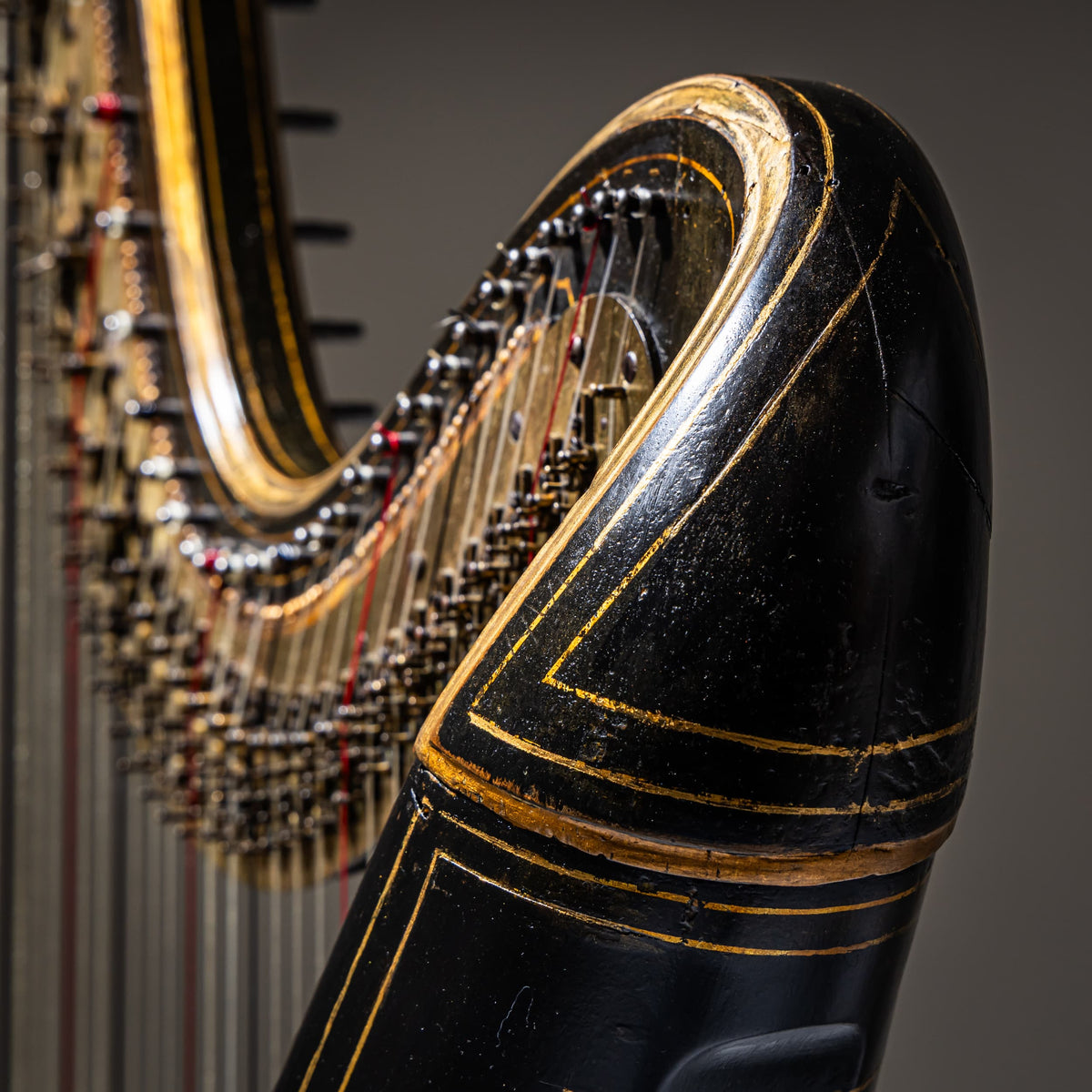
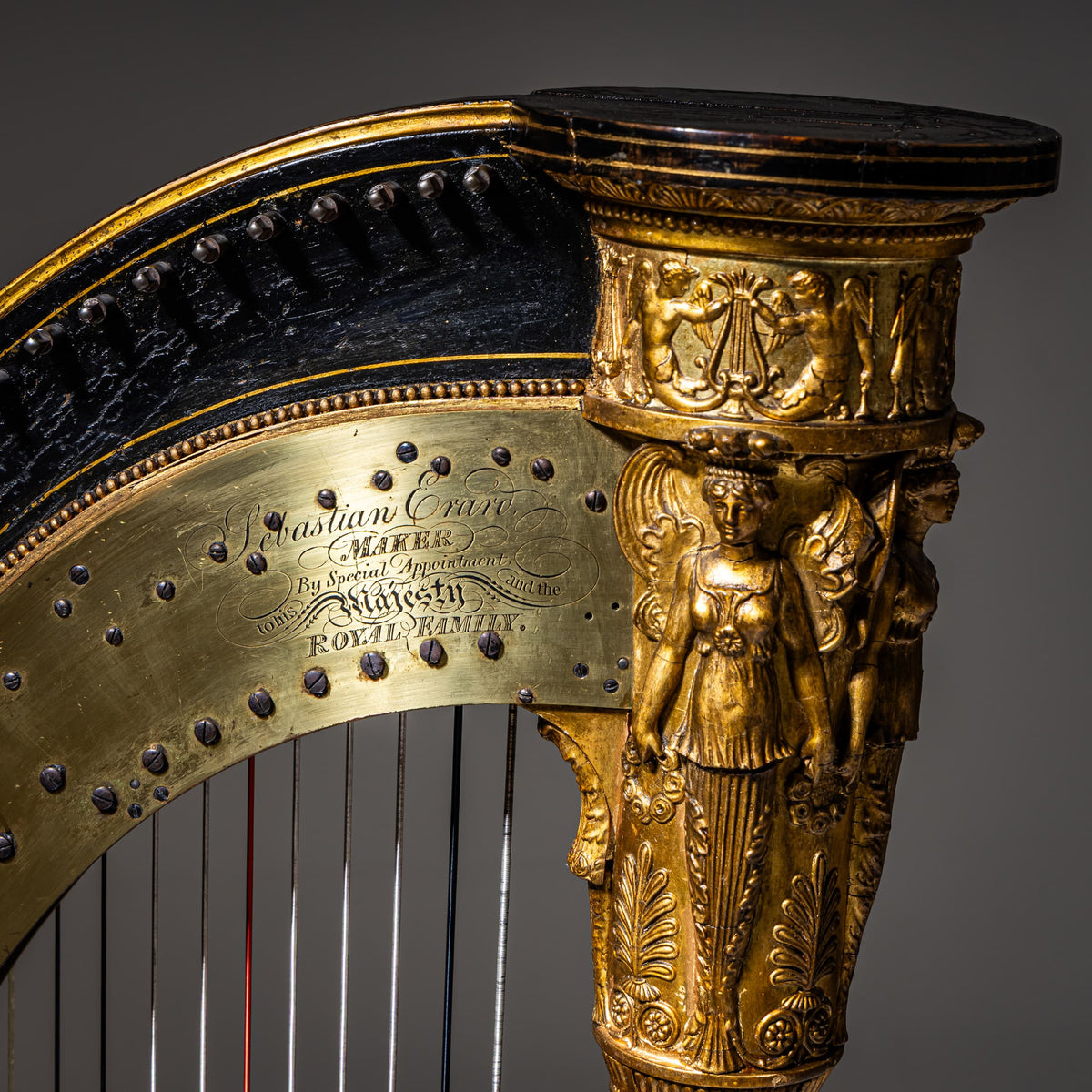
The harp is distinguished by its elaborate black and gold decoration. The curved neck is finished in black, accented with gilt moldings, and fitted with a brass plate bearing the engraved maker's inscription: “Sebastian Erard, Maker, By Special Appointment to His Majesty and the Royal Family”.
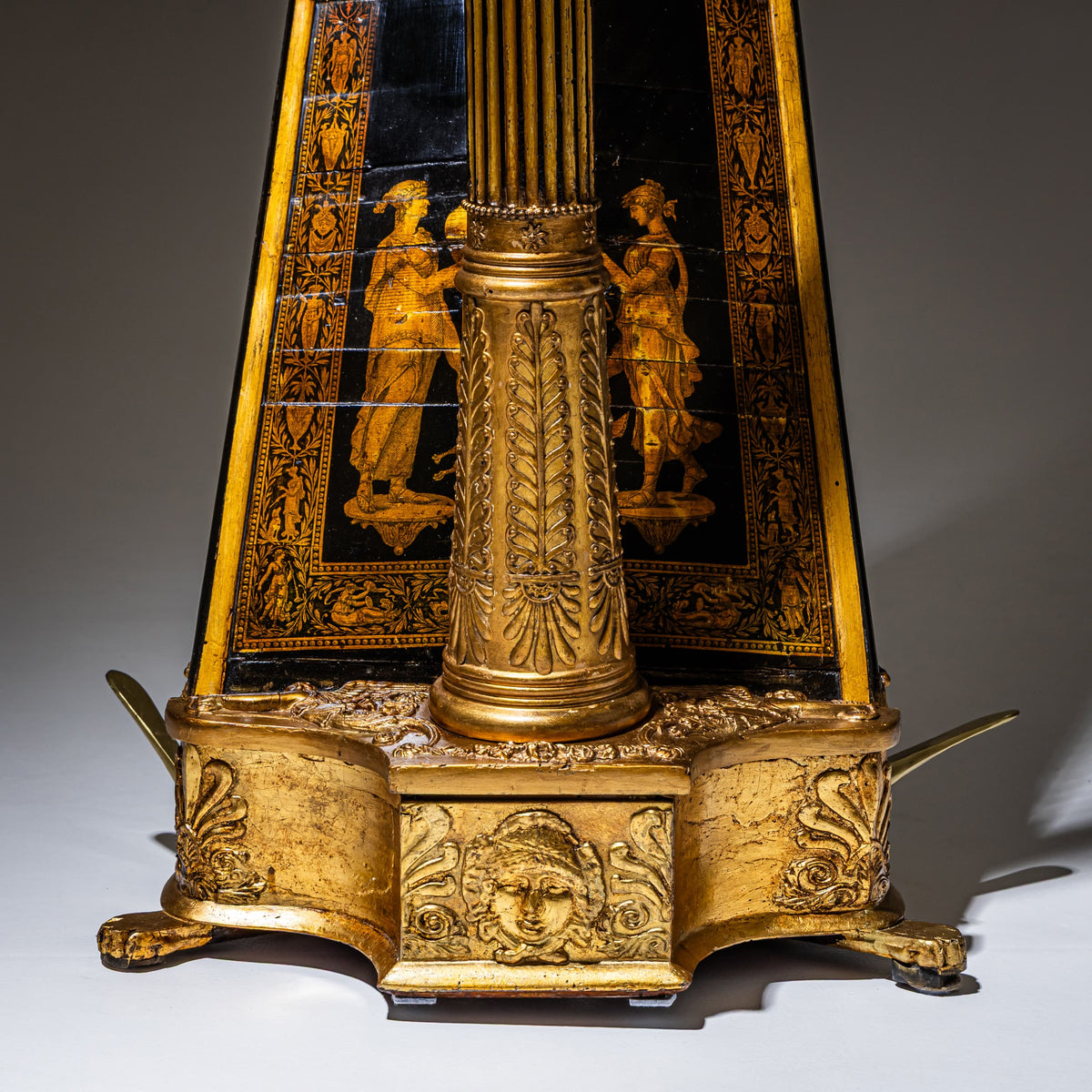
The richly gilded column is decorated at the top with sculptural female figures and a continuous frieze of putti and lyres. The fluted shaft terminates in an ornamentally decorated base featuring palmettes, acanthus leaves, and masks.
The black-painted soundboard is embellished with gold-colored classical figures and ornamental borders. The decorative scheme reflects the formal vocabulary of the Empire and Neoclassical styles.
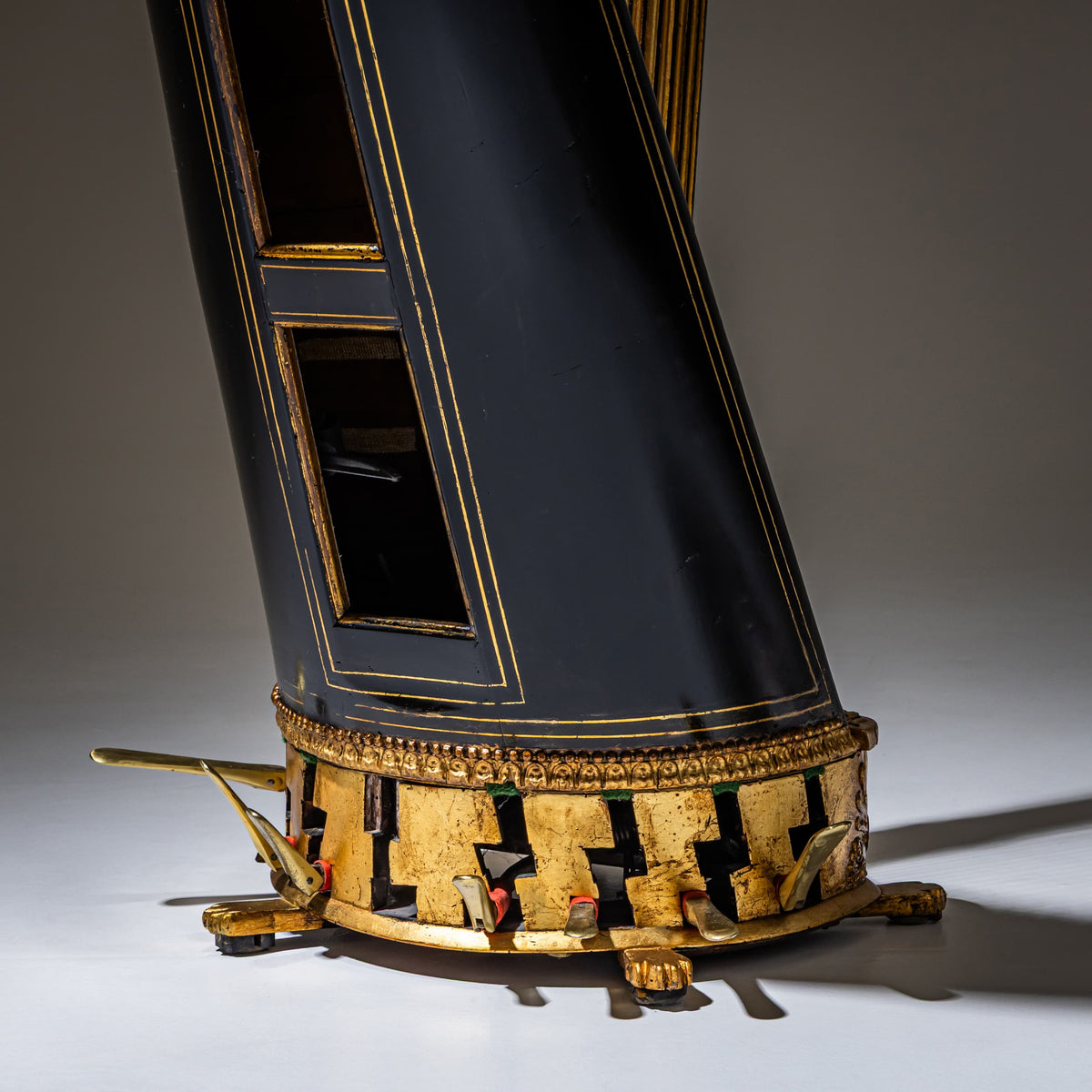
The pedals of the harp's mechanism are located at the base. The elaborate combination of black-painted surfaces, gilding, and figural decoration gives the instrument its distinguished, ceremonial appearance.
The instrument has not been tested for functionality.
Dimensions
- Height
- 171 cm(67¼ in)
- Width
- 80 cm(31½ in)
- Depth
- 50 cm(19¾ in)
← BACK
 Ref. 078-0921
Empire Harp by Sebastian Erard (1752-1831), London, early 19th Century
Price on request
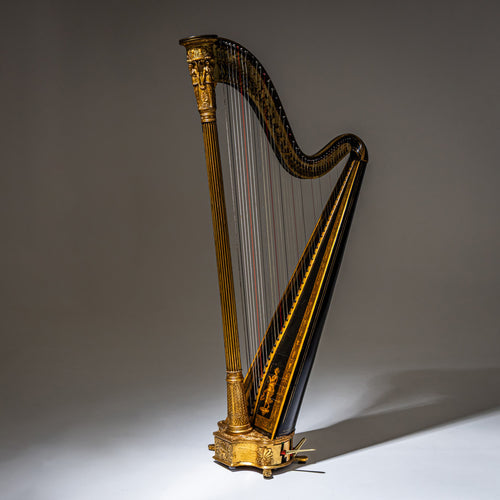
Exceptional Empire harp by Sebastian Erard, London, early 19th century.
The harp is distinguished by its elaborate black and gold decoration. The curved neck is finished in black, accented with gilt moldings, and fitted with a brass plate bearing the engraved maker's inscription: “Sebastian Erard, Maker, By Special Appointment to His Majesty and the Royal Family”.
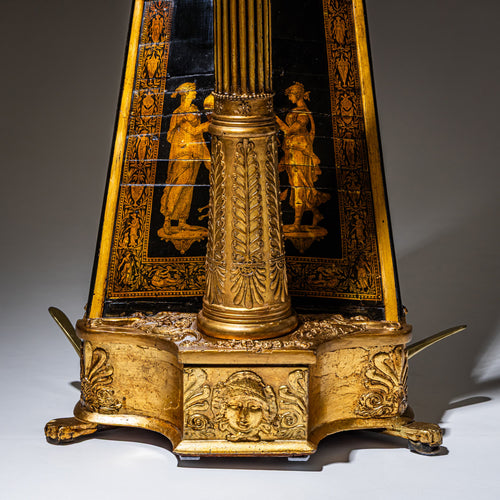
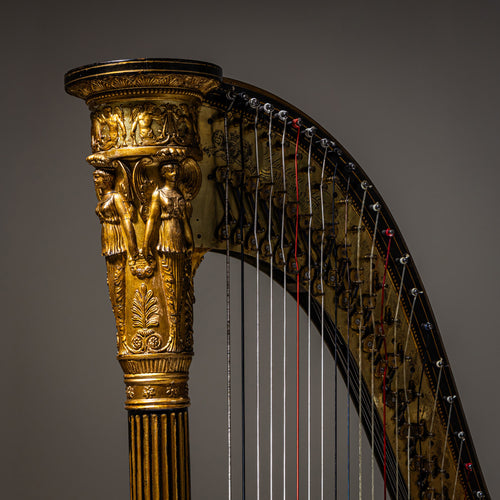
The richly gilded column is decorated at the top with sculptural female figures and a continuous frieze of putti and lyres. The fluted shaft terminates in an ornamentally decorated base featuring palmettes, acanthus leaves, and masks.
The black-painted soundboard is embellished with gold-colored classical figures and ornamental borders. The decorative scheme reflects the formal vocabulary of the Empire and Neoclassical styles.
The pedals of the harp's mechanism are located at the base. The elaborate combination of black-painted surfaces, gilding, and figural decoration gives the instrument its distinguished, ceremonial appearance.
The instrument has not been tested for functionality.
| Units | H | W | D |
|---|---|---|---|
| EU cm | 171 | 80 | 50 |
| US in | 67¼ | 31½ | 19¾ |

Choose options