



Early Biedermeier Mechanical Desk, Formerly Owned by Charles Schulmeister, Austria, Probably Vienna, Early 19th Century
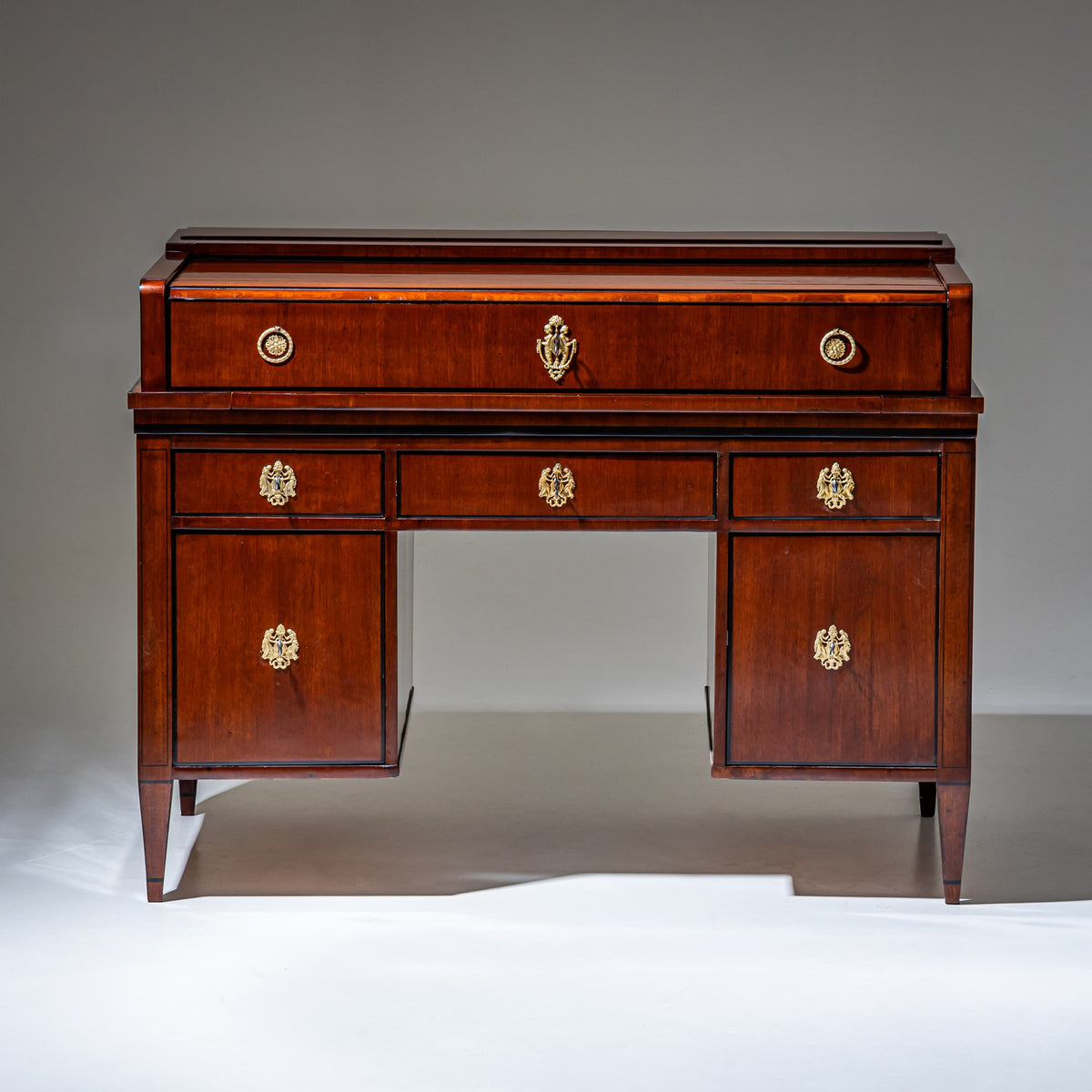
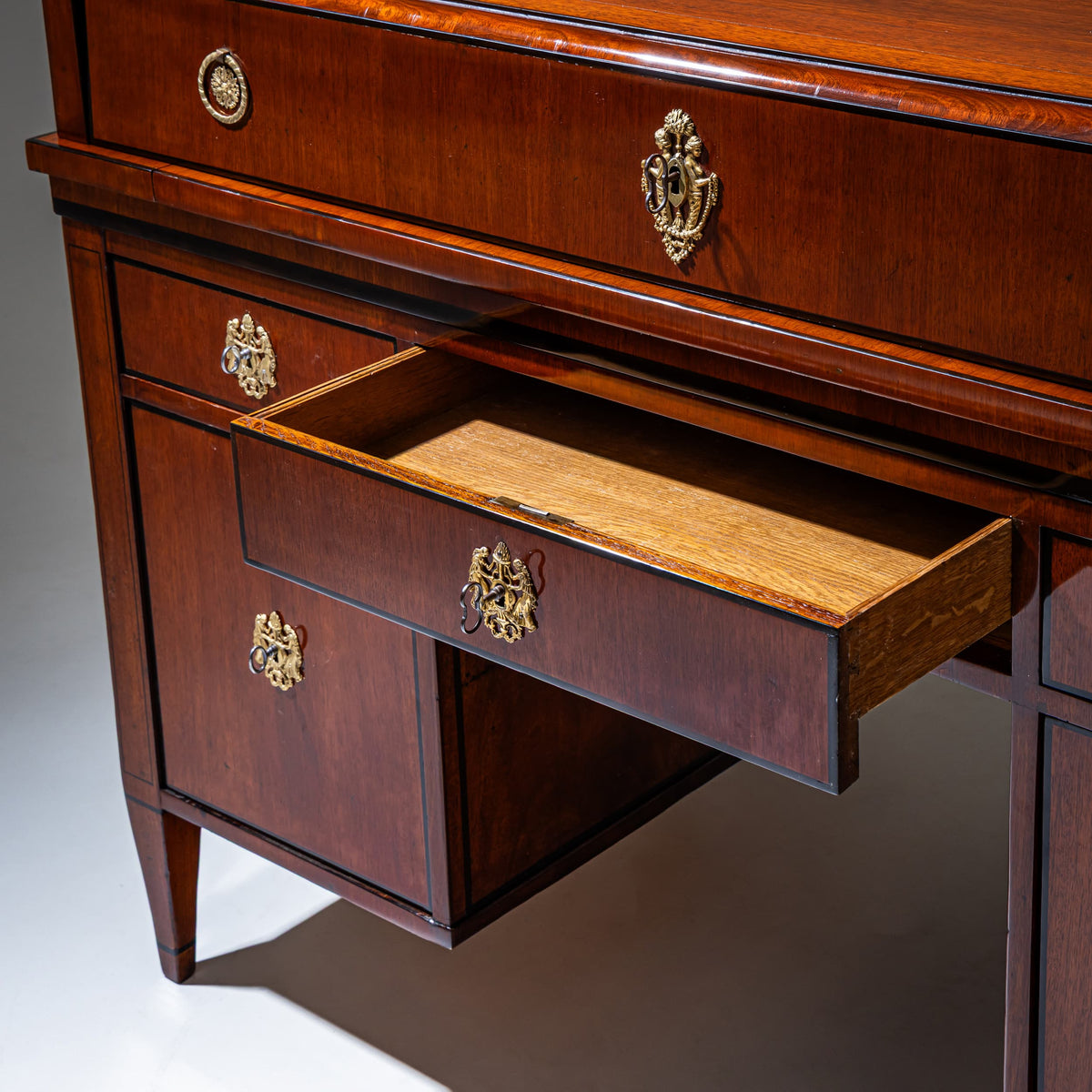
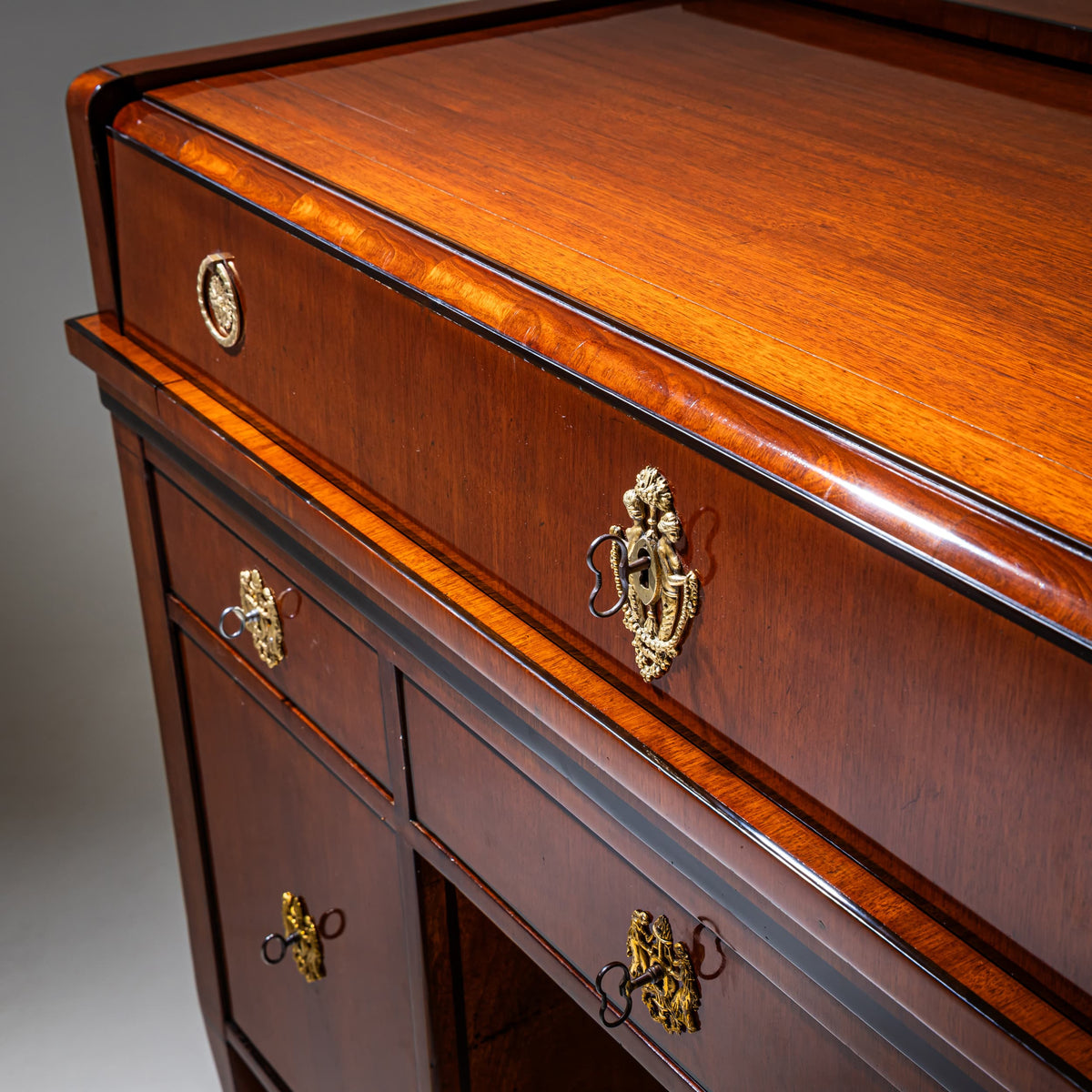
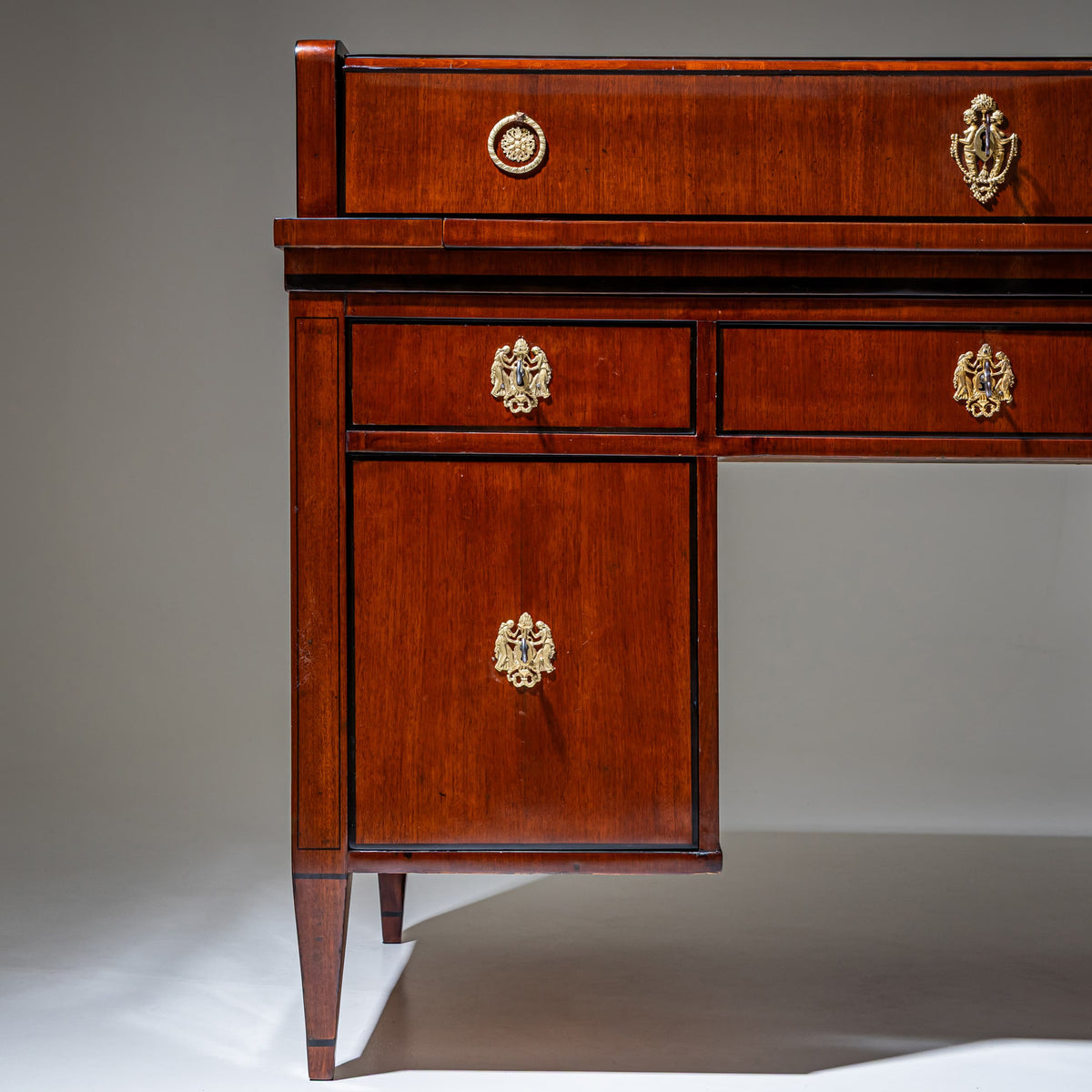
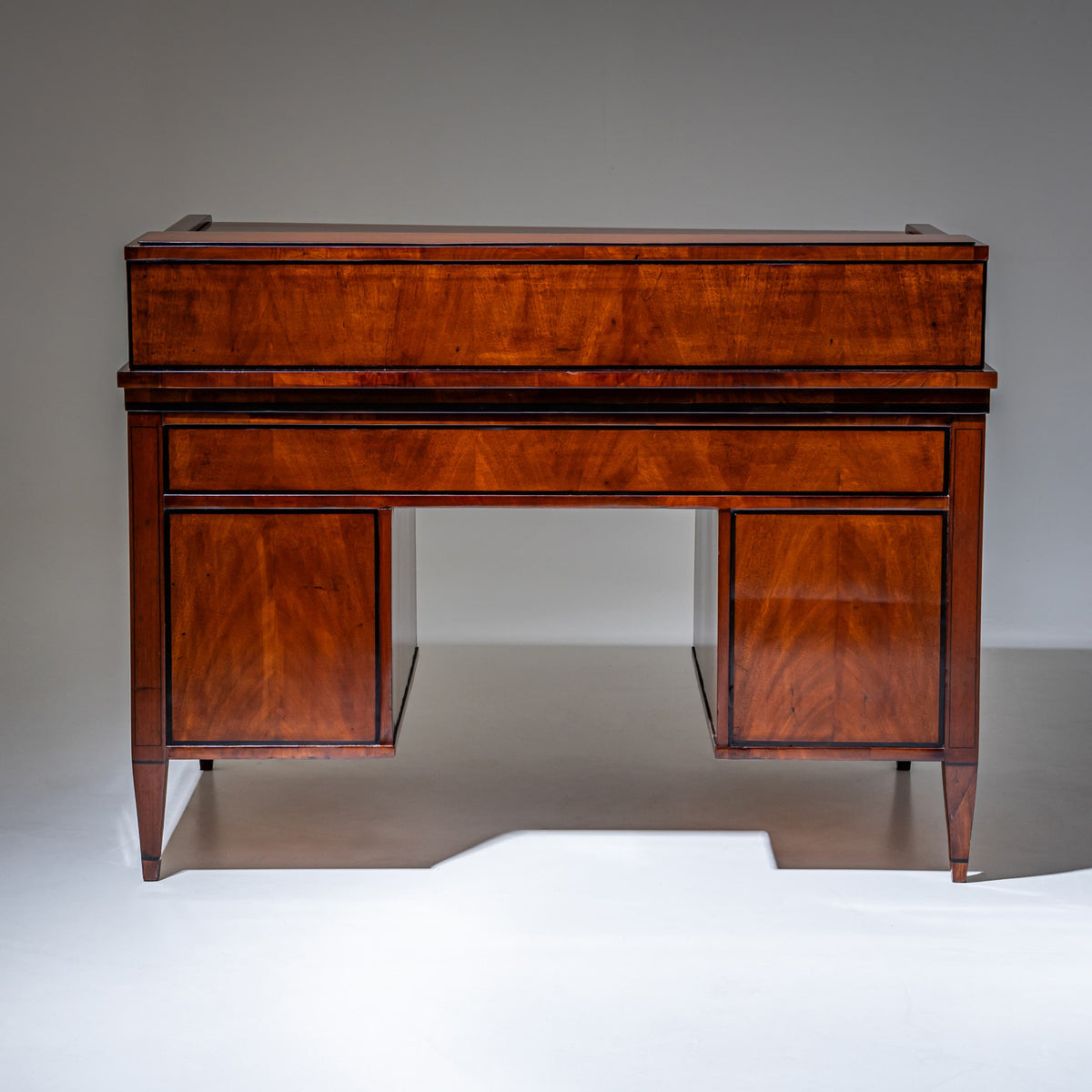
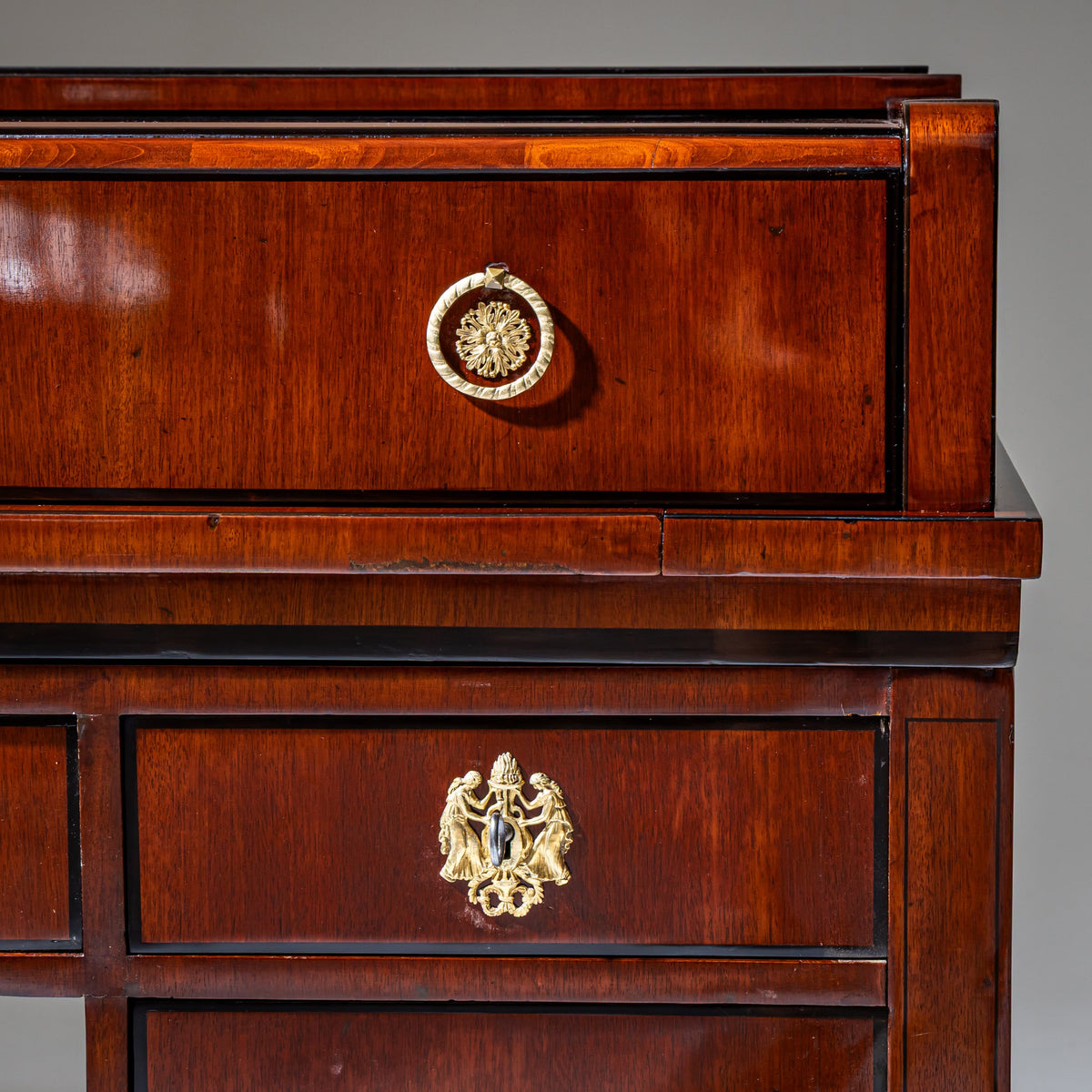
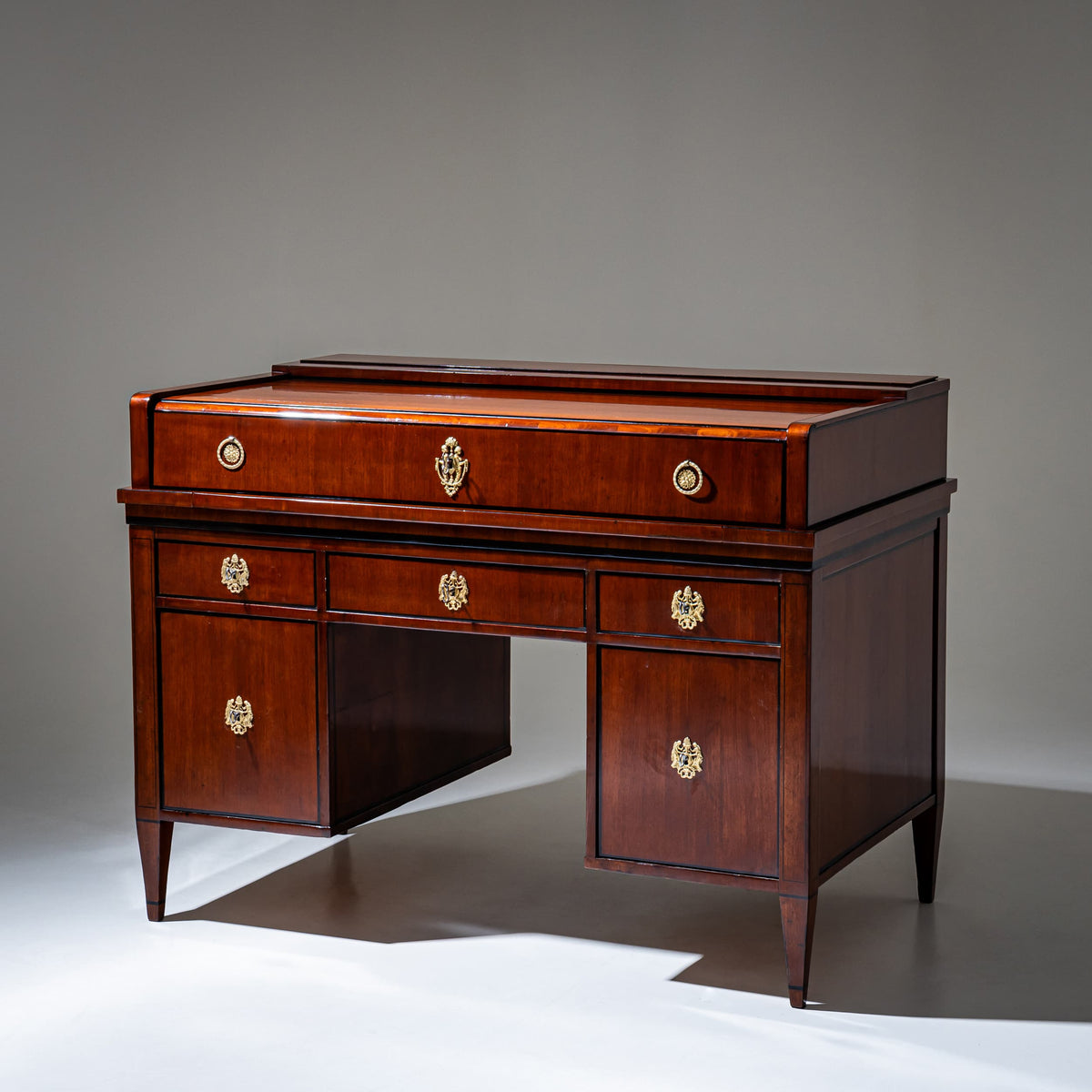
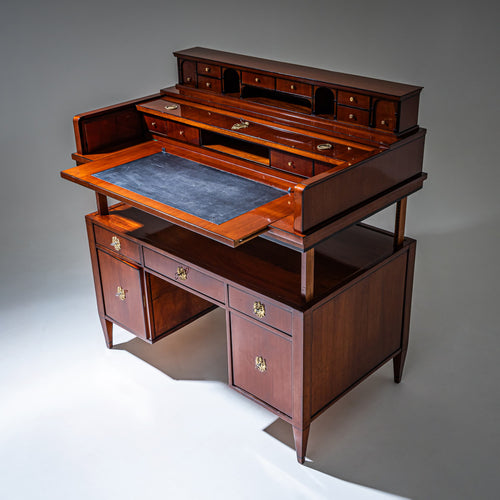
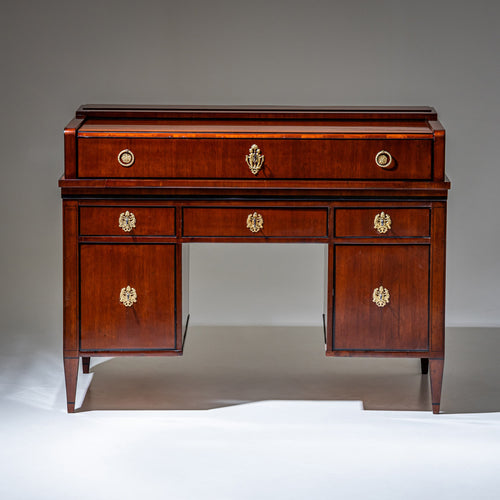
An exceptional early Biedermeier desk, veneered on all sides in mahogany and accented with fine ebonized stringing and moldings. The fully veneered and finished reverse indicates that the desk was conceived to stand freely within a room. The finely executed fire-gilt bronze mounts are of particular quality, each depicting mirrored nymphs with festoons and torches, providing an elegant decorative contrast to the otherwise restrained architectural design.
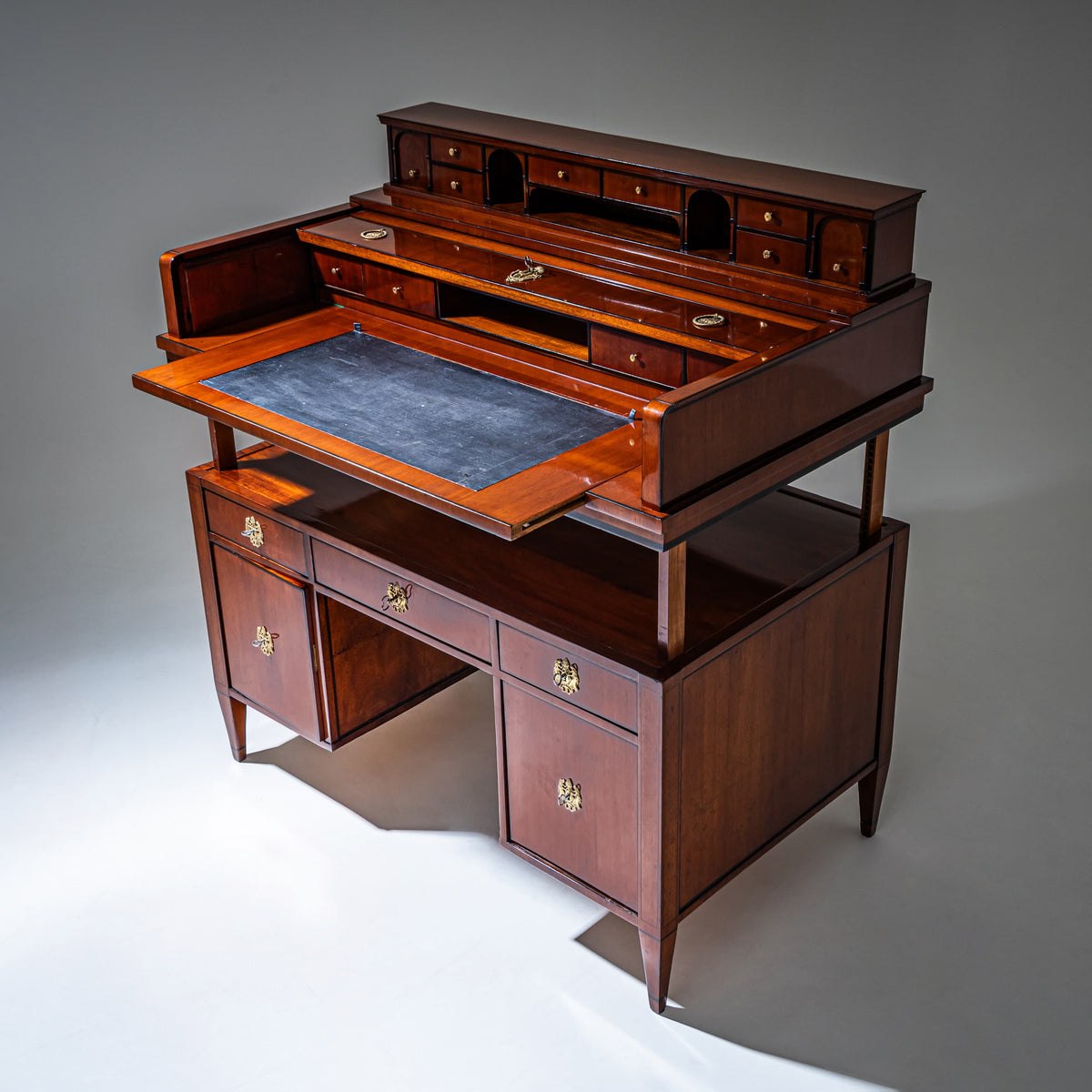
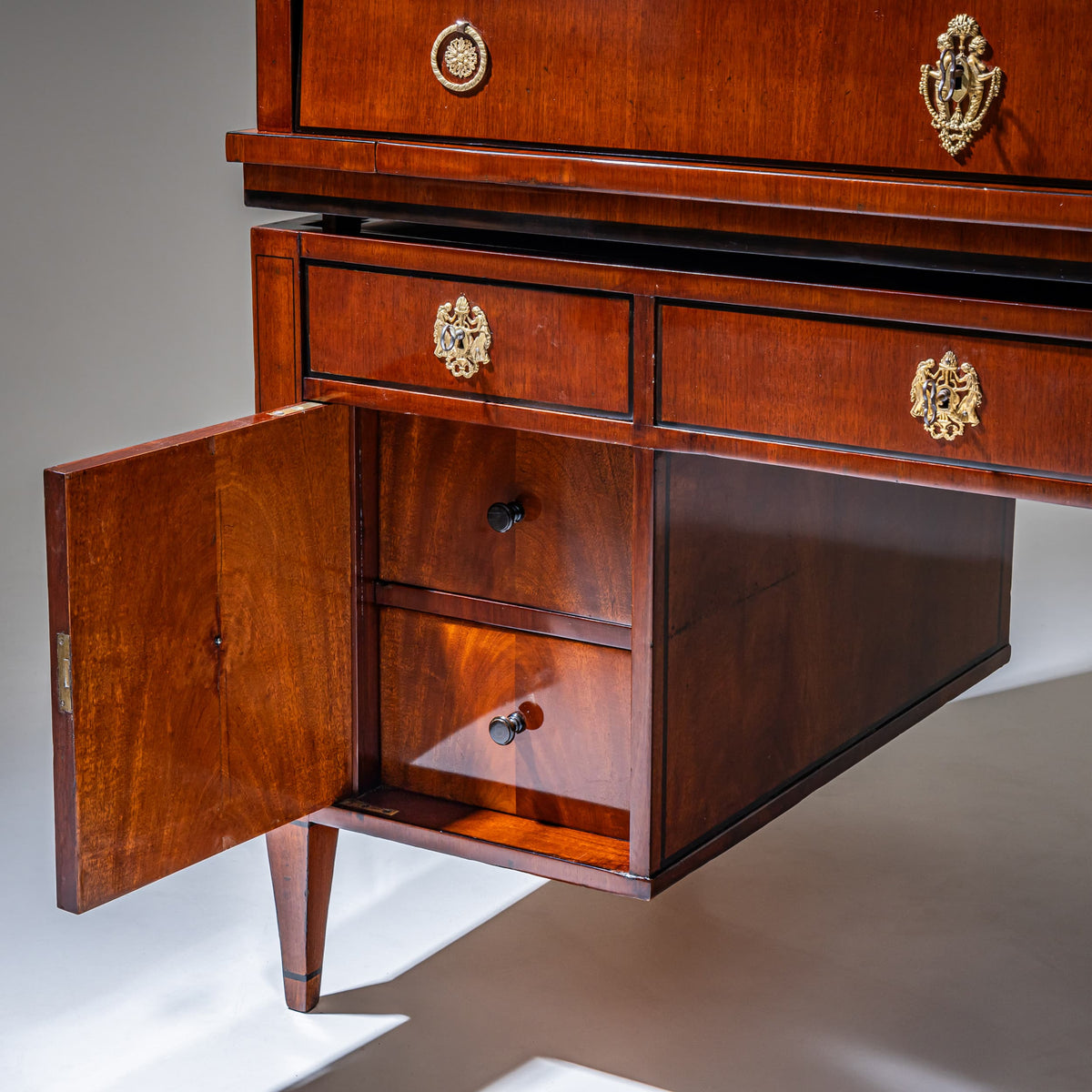
The writing surface is concealed by a roll-top closure that can be pushed back. The writing surface itself can additionally be pulled forward. Behind it are several small drawers. Below the writing surface, the façade is divided into one drawer and four doors concealing additional drawers.
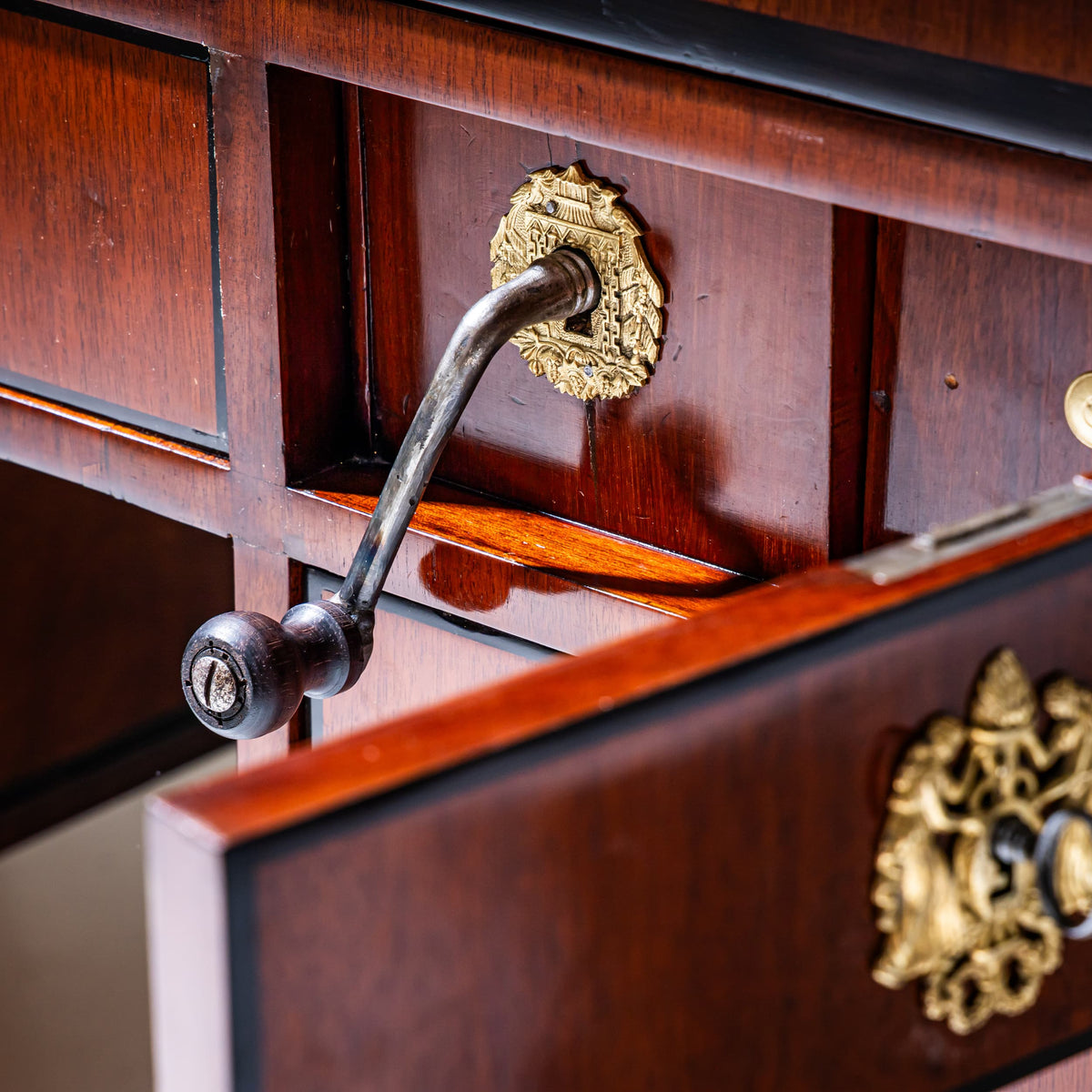
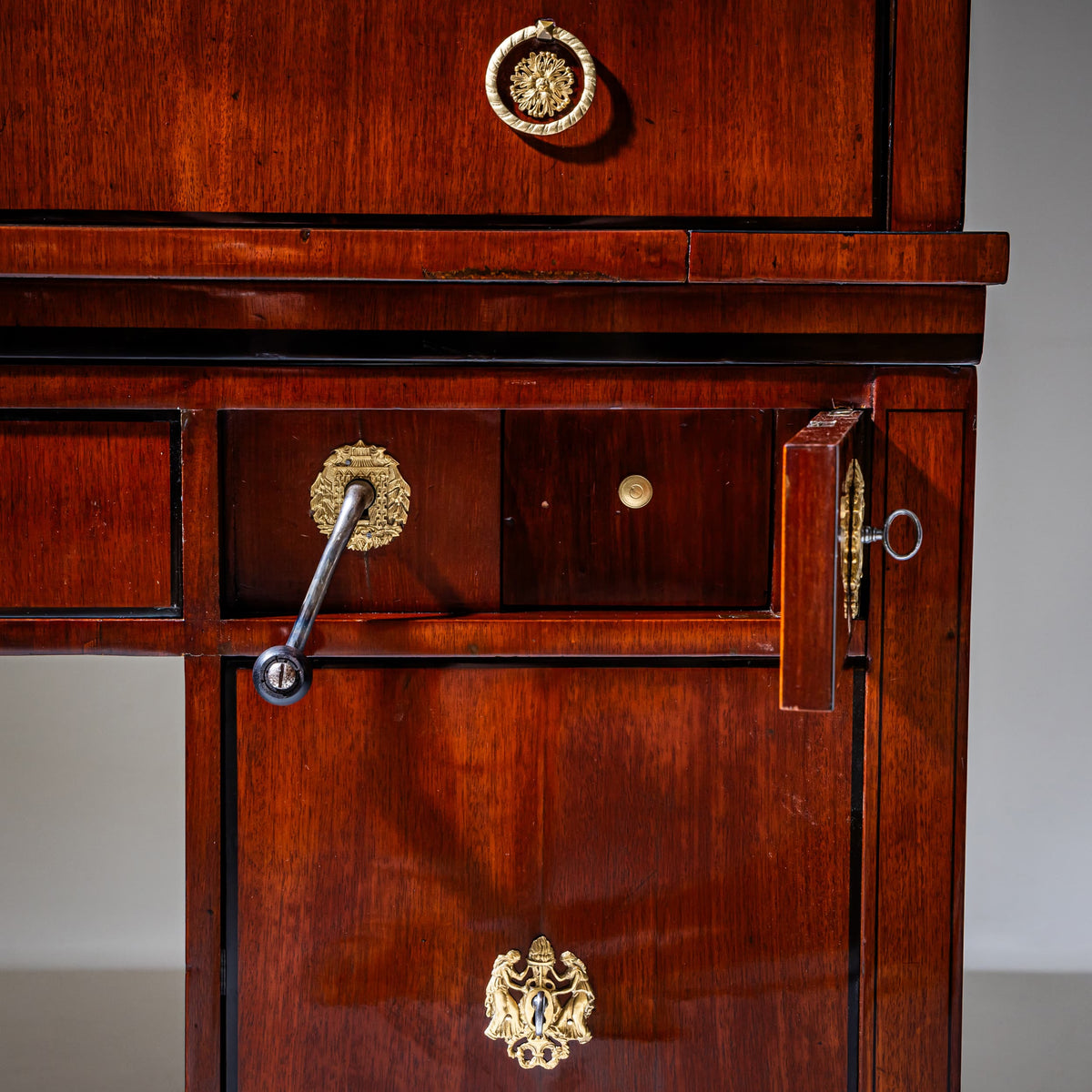
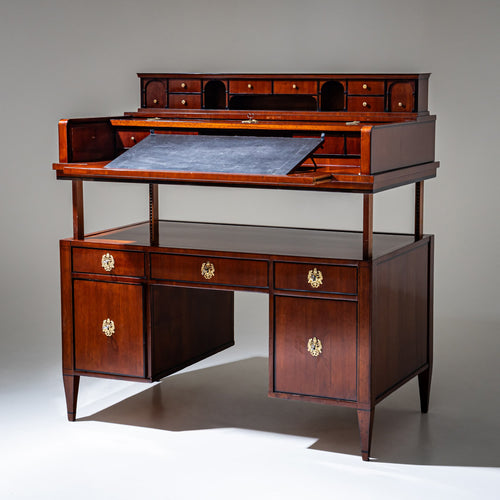
The upper right-hand door provides access to an elaborate crank-operated mechanism, one of the most remarkable features of the desk alongside its exceptional provenance. Once the removable crank is inserted, turning it first raises the rear superstructure by means of an internal shaft.
The superstructure contains small drawers and letter compartments articulated by arched openings and fitted with brass knobs. Continuing to turn the crank raises the entire desktop together with the superstructure. The leather-covered writing surface can then be adjusted to an inclined position, transforming the desk into a raised writing lectern.
Comparable mechanisms are documented in early 19th-century furniture designs preserved in the MAK – Museum of Applied Arts in Vienna. Particularly relevant are Karl Schmidt's Various Projections of a Height-Adjustable Writing Desk of 1825 (MAK, inv. no. KI 7710-13) and Gottlieb August Pohle's Various Projections of Two Desks and the Elevation of a Chair of 1806 (MAK, inv. no. KI 7813-1).
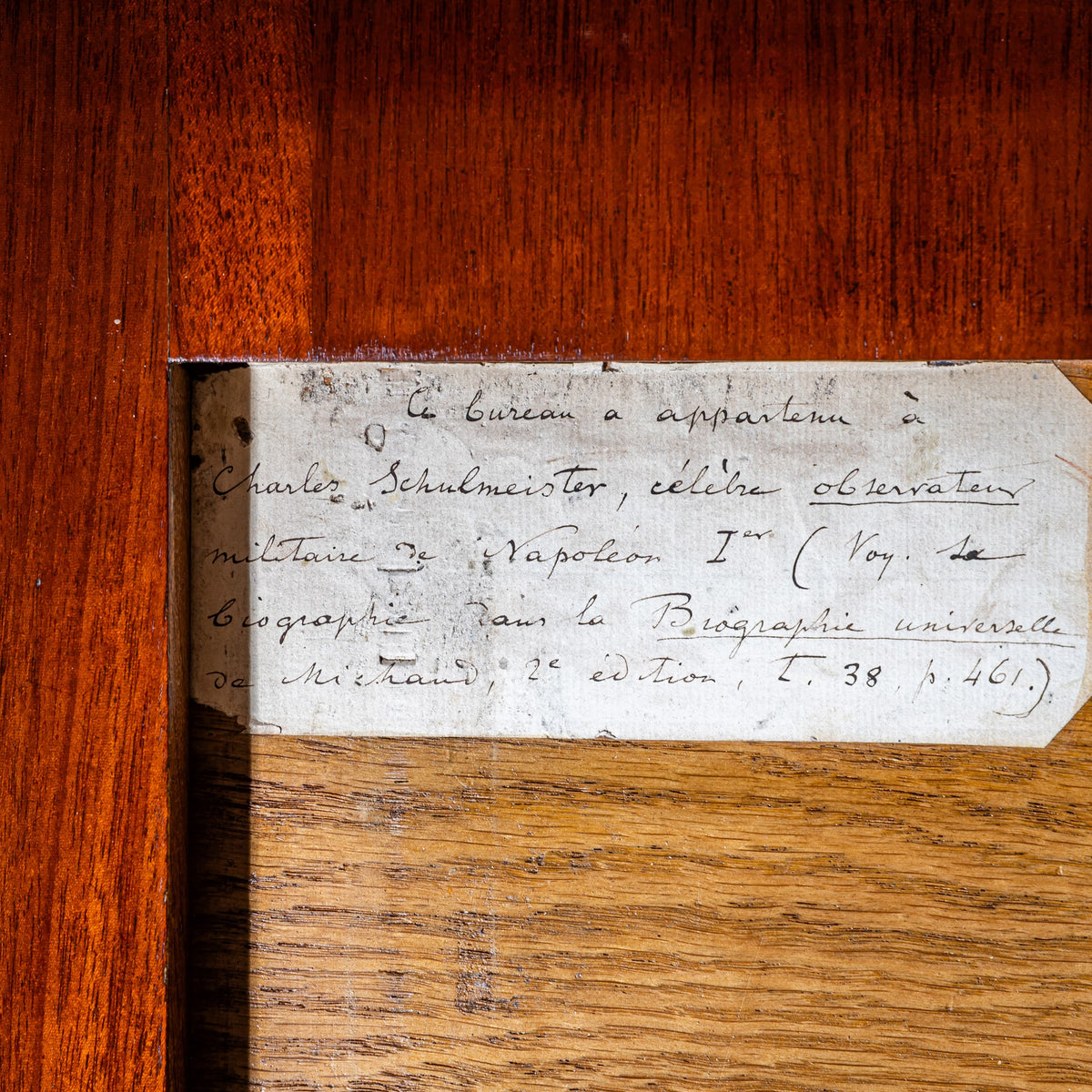
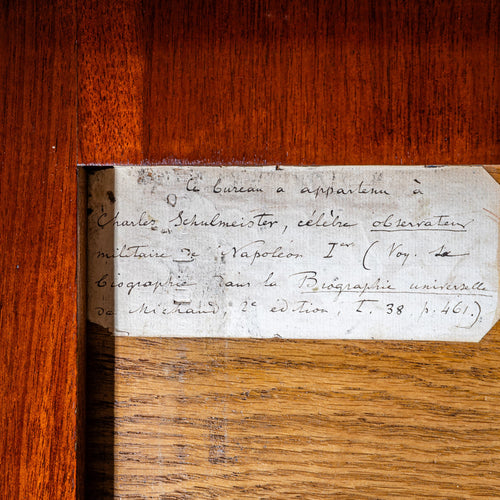
Of particular importance is the desk's historical provenance. Beneath the leather-covered flap is a handwritten inscription in ink:
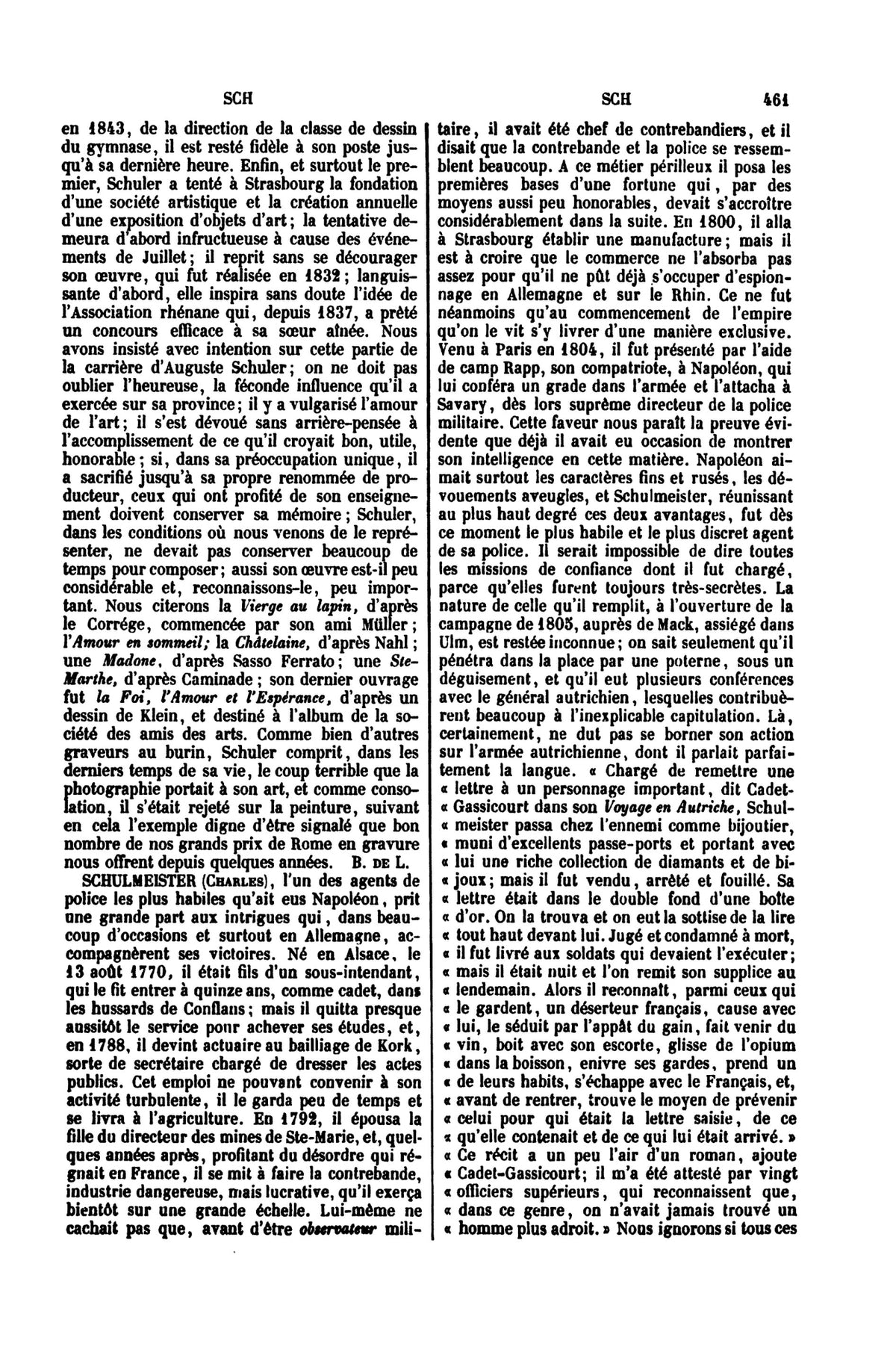
“Ce bureau a appartenu à Charles Schulmeister, célèbre observateur militaire de Napoléon Ier (Voy. sa biographie dans la Biographie universelle de Michaud, 2e édition, T. 38, p. 461.)”
Translation: “This desk belonged to Charles Schulmeister, the famous military observer of Napoleon I. (See his biography in Michaud's Biographie universelle, 2nd edition, vol. 38, p. 461.)”
The second edition of Michaud's Biographie universelle cited in the inscription began publication in 1843, thereby providing a terminus post quem for the provenance inscription itself, though not for the manufacture of the desk.
Charles Schulmeister (1770–1853) was one of the best-known secret agents in the service of Napoleon I. Born in Baden, the merchant and former smuggler became an important figure in Napoleonic intelligence, renowned for his abilities in deception, disguise, and the gathering of information. He is particularly associated with the 1805 campaign against Austria and the events surrounding the capitulation of Ulm. During the French occupation of Vienna, Schulmeister also assumed important policing responsibilities and was repeatedly present in the Austrian capital between 1805 and 1809. Many of the more spectacular stories surrounding his espionage activities, however, remain insufficiently documented and became part of his legend even during his lifetime.
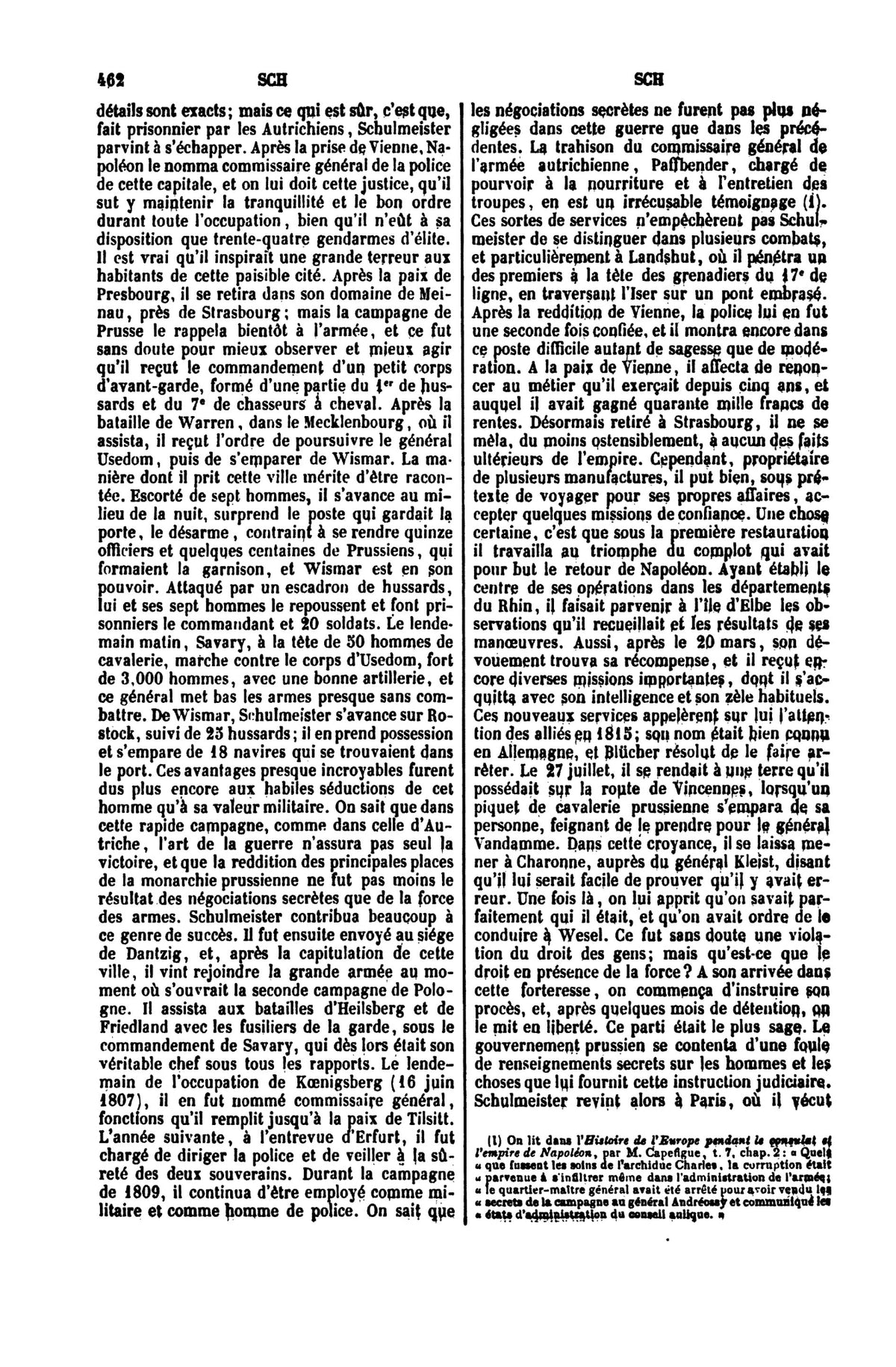
The desk's Austrian, probably Viennese origin, combined with Schulmeister's close connection to Vienna during the Napoleonic occupation, raises the intriguing possibility that the desk was used within his circle during these years. The historical inscription itself establishes its former ownership by Charles Schulmeister, while its specific use during his activities in Vienna cannot presently be documented.
Extended dimensions: 140 × 133.5 × 97 cm.
The desk has been professionally restored and hand-polished.
Literature and comparative examples:
Fondation Napoléon, Napoleon.org, “Schulmeister, Karl Ludwig (1770–1853), l’espion de Napoléon.”
MAK – Museum of Applied Arts, Vienna, inv. nos. KI 7710-13 and KI 7813-1.
Dimensions
- Height
- 100 cm(39¼ in)
- Width
- 133.5 cm(52½ in)
- Depth
- 80.5 cm(31¾ in)

Early Biedermeier Mechanical Desk, Formerly Owned by Charles Schulmeister, Austria, Probably Vienna, Early 19th Century
Price on request
An exceptional early Biedermeier desk, veneered on all sides in mahogany and accented with fine ebonized stringing and moldings. The fully veneered and finished reverse indicates that the desk was conceived to stand freely within a room. The finely executed fire-gilt bronze mounts are of particular quality, each depicting mirrored nymphs with festoons and torches, providing an elegant decorative contrast to the otherwise restrained architectural design.
The writing surface is concealed by a roll-top closure that can be pushed back. The writing surface itself can additionally be pulled forward. Behind it are several small drawers. Below the writing surface, the façade is divided into one drawer and four doors concealing additional drawers.
The upper right-hand door provides access to an elaborate crank-operated mechanism, one of the most remarkable features of the desk alongside its exceptional provenance. Once the removable crank is inserted, turning it first raises the rear superstructure by means of an internal shaft.
The superstructure contains small drawers and letter compartments articulated by arched openings and fitted with brass knobs. Continuing to turn the crank raises the entire desktop together with the superstructure. The leather-covered writing surface can then be adjusted to an inclined position, transforming the desk into a raised writing lectern.
Comparable mechanisms are documented in early 19th-century furniture designs preserved in the MAK – Museum of Applied Arts in Vienna. Particularly relevant are Karl Schmidt's Various Projections of a Height-Adjustable Writing Desk of 1825 (MAK, inv. no. KI 7710-13) and Gottlieb August Pohle's Various Projections of Two Desks and the Elevation of a Chair of 1806 (MAK, inv. no. KI 7813-1).
Of particular importance is the desk's historical provenance. Beneath the leather-covered flap is a handwritten inscription in ink:
“Ce bureau a appartenu à Charles Schulmeister, célèbre observateur militaire de Napoléon Ier (Voy. sa biographie dans la Biographie universelle de Michaud, 2e édition, T. 38, p. 461.)”
Translation: “This desk belonged to Charles Schulmeister, the famous military observer of Napoleon I. (See his biography in Michaud's Biographie universelle, 2nd edition, vol. 38, p. 461.)”
The second edition of Michaud's Biographie universelle cited in the inscription began publication in 1843, thereby providing a terminus post quem for the provenance inscription itself, though not for the manufacture of the desk.
Charles Schulmeister (1770–1853) was one of the best-known secret agents in the service of Napoleon I. Born in Baden, the merchant and former smuggler became an important figure in Napoleonic intelligence, renowned for his abilities in deception, disguise, and the gathering of information. He is particularly associated with the 1805 campaign against Austria and the events surrounding the capitulation of Ulm. During the French occupation of Vienna, Schulmeister also assumed important policing responsibilities and was repeatedly present in the Austrian capital between 1805 and 1809. Many of the more spectacular stories surrounding his espionage activities, however, remain insufficiently documented and became part of his legend even during his lifetime.
The desk's Austrian, probably Viennese origin, combined with Schulmeister's close connection to Vienna during the Napoleonic occupation, raises the intriguing possibility that the desk was used within his circle during these years. The historical inscription itself establishes its former ownership by Charles Schulmeister, while its specific use during his activities in Vienna cannot presently be documented.
Extended dimensions: 140 × 133.5 × 97 cm.
The desk has been professionally restored and hand-polished.
Literature and comparative examples:
Fondation Napoléon, Napoleon.org, “Schulmeister, Karl Ludwig (1770–1853), l’espion de Napoléon.”
MAK – Museum of Applied Arts, Vienna, inv. nos. KI 7710-13 and KI 7813-1.
| Units | H | W | D |
|---|---|---|---|
| EU cm | 100 | 133.5 | 80.5 |
| US in | 39¼ | 52½ | 31¾ |

Choose options